
Learning Japanese is exciting — but let’s be honest, it can also feel overwhelming at the start. You quickly realize that Japanese doesn’t use the English alphabet. Instead, there are two phonetic scripts — hiragana and katakana — with over 140 characters combined once you add dakuten and handakuten variations.
Most learners start with a simple kana chart, but staring at a page full of unfamiliar symbols doesn’t guarantee you’ll remember them. That’s where a structured, interactive system makes all the difference.
In this post, I’ll show you how my 10-sheet kana practice set helps you learn hiragana and katakana faster, retain them longer, and actually enjoy the process.

The Problem with Traditional Charts
If you’ve tried memorizing hiragana and katakana from a PDF or textbook, you’ve probably hit these roadblocks:
- Charts are passive → Looking at a page doesn’t activate your memory. You might recognize あ or カ in the moment, but a day later, it slips away.
- Too much at once → 142 characters can feel like climbing a mountain. Without structure, it’s easy to get discouraged.
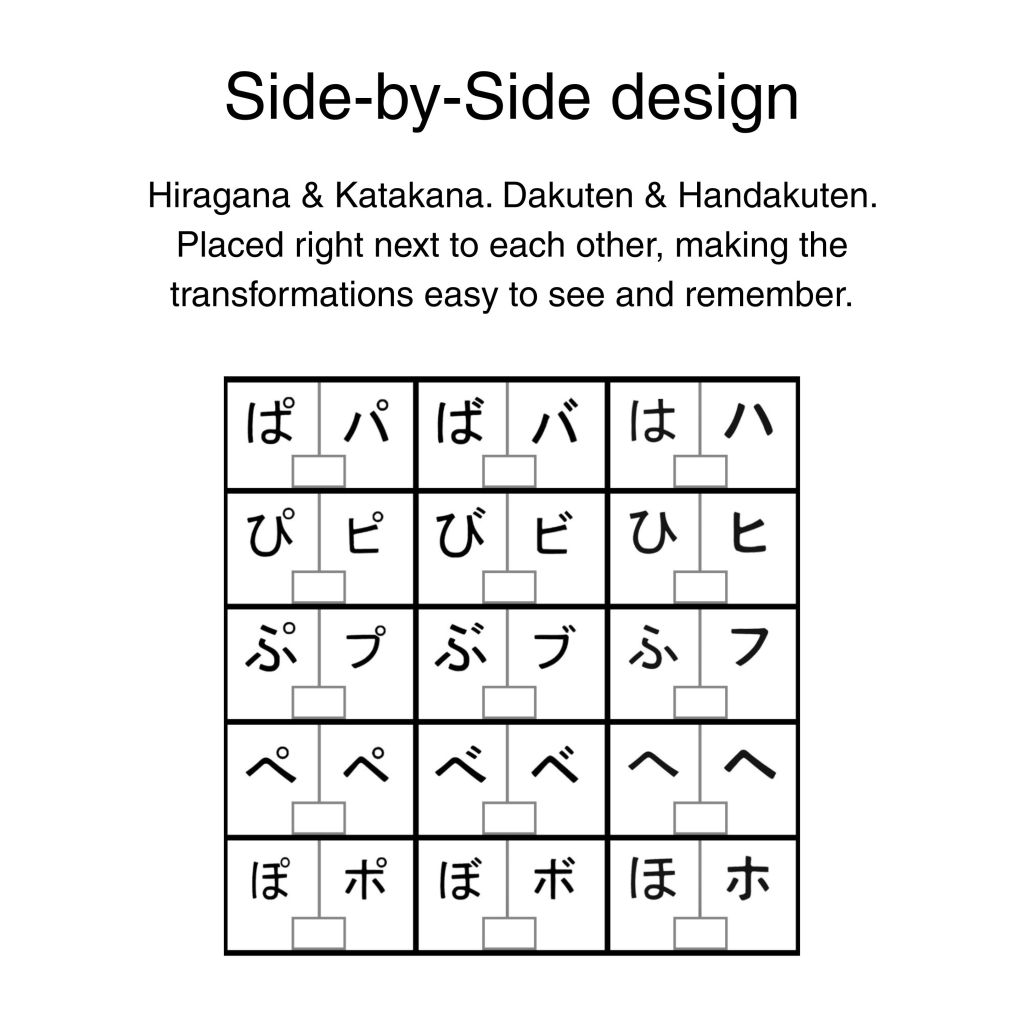
- Sound changes add confusion → Dakuten (゛) and handakuten (゜) alter the base characters, but if you don’t see them side-by-side, it’s harder to connect the dots.
- Writing practice gets skipped → Without tracing or repetition, your brain doesn’t build the muscle memory that makes kana automatic.
Simply put: passive learning doesn’t stick. You need active recall, repetition, and interaction to move kana from short-term memory into long-term mastery.
The Solution: A 10-Sheet Practice Set
That’s why I designed a 10-sheet kana practice set — printable, laminatable, and reusable — to guide you step by step.
Here’s what’s included:
- Full Hiragana + Katakana Chart with Romaji → A complete reference guide.
- Full Kana Chart (no Romaji) → Encourages recognition without relying on English letters.
- Blank Grid → Test your recall by filling everything in.
- Romaji-Only Grid → Write the correct kana from pronunciation prompts.
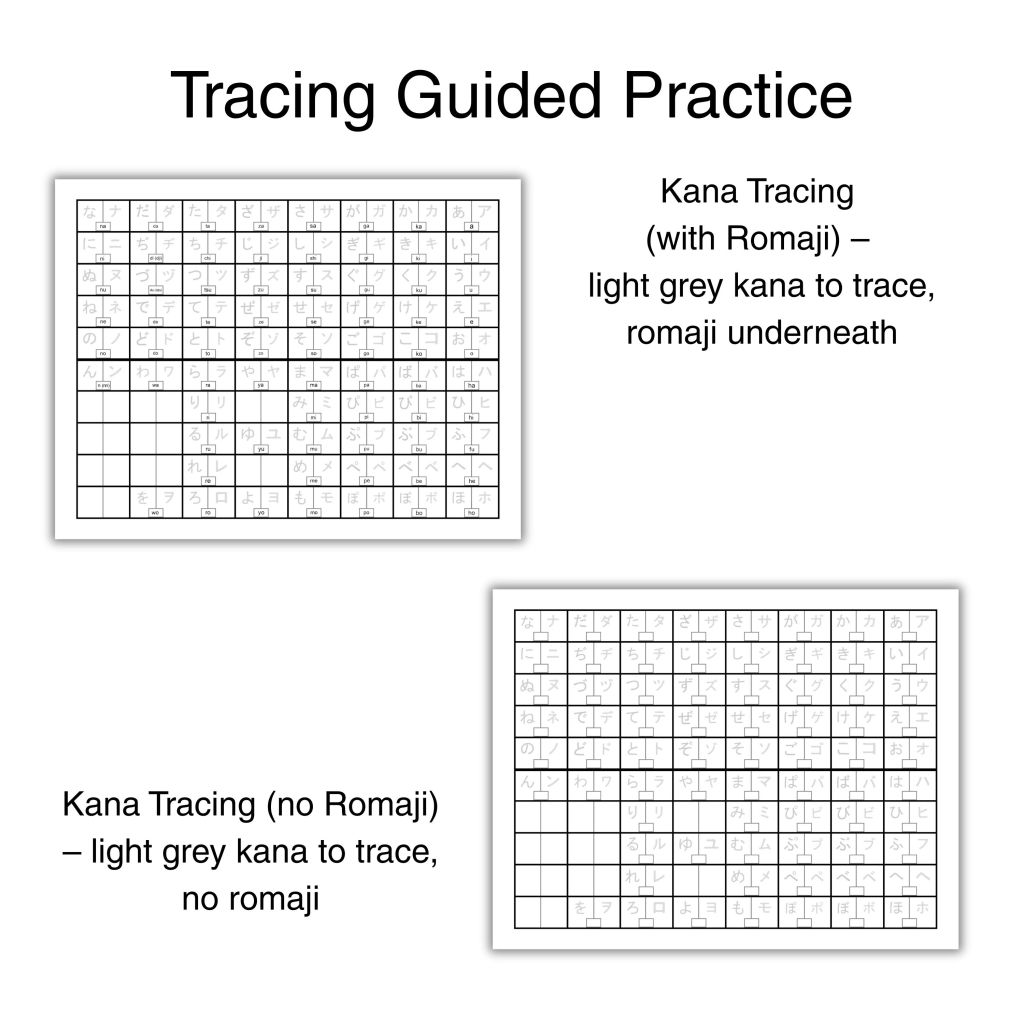
- Tracing Sheets with Romaji → Light grey kana + romaji underneath to guide writing.
- Tracing Sheets without Romaji → Same as above, but kana only for pure practice.
- Katakana + Romaji Sheet → Focused practice on katakana recognition.
- Katakana Only Sheet → Push yourself to recall without hints.
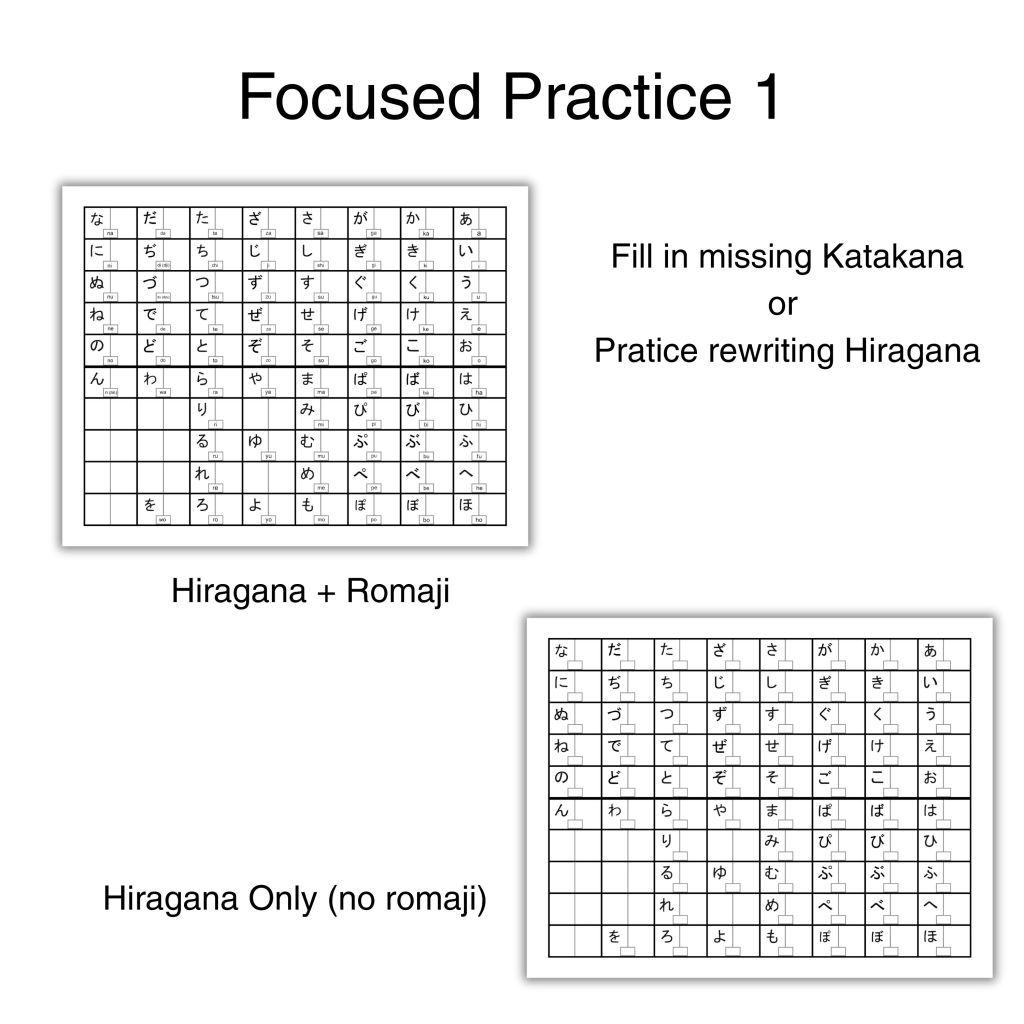
- Hiragana + Romaji Sheet → Focused hiragana practice with pronunciation guides.
- Hiragana Only Sheet → Final challenge: write without prompts.
It’s not just a chart — it’s a mini learning system.


Why This Method Works
This set combines multiple memory strategies proven to work for language learning:
- Side-by-Side Dakuten & Handakuten
Each voiced or “p-sound” character sits right next to its base version (か→が, は→ぱ). This makes the sound changes instantly clear instead of something you have to memorize separately. - Position-Based Memory
The kana grid layout itself becomes a mnemonic device. You start remembering characters not only by shape, but also by where they are in the chart. - Active Recall
Fill-in-the-blank and romaji-only sheets force your brain to pull information out, which strengthens memory far more than passively re-reading. - Muscle Memory
Tracing sheets help your hand learn the natural flow of kana strokes, reinforcing visual and motor memory together. - Reusable Practice
Laminate the sheets and use a dry or wet erase marker. Practice daily, wipe clean, and start again — no wasted paper. You can also use a sheet protector. - Gamified Learning
Do time trials, challenge yourself to beat your best score, or compete with friends. The process becomes a game, not a chore.


How to Use the Sheets
Here’s a step-by-step routine you can follow:
Step 1. Start with Tracing
Tracing gives you a soft landing into kana. The light-grey characters help you practice the stroke order and flow without worrying about mistakes.
- Use the tracing sheets with romaji first to connect sound + shape.
- Then move on to tracing sheets without romaji for pure kana practice.
- Goal: get your hand used to the rhythm of writing kana.
Step 2. Alternate Hiragana & Katakana Days
Instead of cramming both scripts every day, rotate your focus.
- Day 1: Hiragana only → trace, read, and review.
- Day 2: Katakana only → same process.
- Keep alternating to build balance.
- Why it works: this reduces overwhelm while still making steady progress in both.
Step 3. Practice Recognition with Full Charts
Now that your hand is warmed up, review visually.
- Use the full chart with romaji to double-check sounds.
- Switch to the chart without romaji to test recognition alone.
- Tip: cover parts of the chart with a sheet of paper and quiz yourself column by column.
Step 4. Romaji-Only Prompts
This is where you flip the process: instead of looking at kana and saying the sound, you see the sound (romaji) and must recall the kana.
- This step strengthens active recall, which is key to mastery.
- If you get stuck, glance back at the full chart — but don’t rely on it.
- Challenge: do a row or column from memory before checking answers.
Step 5. Test Yourself with Blank Grids
Now comes the challenge. With the blank grid, you must fill in all characters from memory.
- This step forces your brain to rebuild the chart from scratch, reinforcing both position and recall.
- If you get stuck, leave the box empty and come back later. Struggle = learning.
- Do this once or twice a week to measure progress.
Step 6. Add Speed Practice
Finally, gamify your study.
- Use a timer to see how quickly you can fill in the blank grid or romaji-only sheet.
- Track your “personal best” times and try to beat them.
- Remember: accuracy first, then speed.
This turns studying into a game-like challenge — addictive and motivating.

Tips for Success
- Practice daily for 10–15 minutes. Short, consistent sessions beat cramming.
- Mix reading and writing → recognition and recall build different skills.
- Use chart position as a hook → e.g., “あ is top right, the very first kana.”
- Review dakuten/handakuten early → don’t treat them as extra; they’re core sounds.
- Celebrate progress → getting through the chart once cleanly is a milestone!
Final Thoughts
Learning hiragana and katakana is your first big step into Japanese. It can feel intimidating, but it doesn’t have to. With the right tools, you can make the process structured, interactive, and even fun.
This 10-sheet practice set gives you everything you need: reference charts, tracing guides, recall tests, and reusable practice that grows with you.
👉 Ready to master Japanese kana? Grab your set today, laminate it, and start making your study stick.
 Armadillo Amore